
How to slow travel?
(even if you don’t have time)
Many people have fallen in love with the idea of slow travel. But not everyone can take weeks of work to really get to know a place. I totally get it, I usually can’t do it either. So I decided to write this post with tips for how to slow travel (even if you don’t have time). We start off with a quick definition of Slow travel. Once we know what it is, we can look at how to implement it. And just to be clear, we aren’t going to aim for the perfect slow travel situation here. This post is about being realistic and doing what you can to minimize your impact on the planet and its inhabitants while you have great time. Even if that time is not as long as you’d like (when is it ever).
What is Slow Travel?
This is something people can’t seem to agree on. Over the years I have read so many different opinions on this. Some people use stricter ones, others are more focused on mindfulness, feelings and authenticity. And I agree that there isn’t one strict definition of what slow travel is. So let’s start with my personal definition:
Slow travel is traveling in a way that prioritizes respecting and understanding a place, while minimizing the impact you have on said place.
I should mention that when I say place, I also mean:
- The people who live and work there,
- The natural environment,
- and its history and culture.
That still sounds super vague, I know.
Wikipedia has the following definition: Slow tourism is an alternative tourism choice in contrast to mass tourism. Slow tourism is a part of the sustainable tourism family, different from mainstream tourism and emphasizing the tourist’s greater personal awareness. It is characterized by reducing mobility and by taking time to explore local history and culture, while supporting the environment. The concept emerged from the Italian Slow Food movement and the Cittaslow movement.
But don’t you have to take a really long time to do that?
The longer you are somewhere the more you can learn about things and see the connections that made it it’s own. But that doesn’t mean you can’t do those things when you are somewhere for only a few days. It’s easy to limit your impact even if you can’t completely do it as you’d like. Anything is better than nothing.
Figure out why you want to travel
This may seem simple, but in my experience it’s not as simple as it sounds. And you need to know this, if you want to be able to use any of the steps below. Your answer to this may not always be the same.
I discovered this when around 2 years ago I went to Genoa for a few days with my partner. We were both tired and in desperate need of a break. While those few days were great, we didn’t really feel recharged at all when we got back. Turns out what we actually needed was to get away from people and have low input for a few days. So for our next trip we just went to a cabin in the woods for a couple of days. That worked way better for us, in that moment.
At other times you may want to immerse yourself in a different culture and learn new things. Maybe you have something on your bucket list that you want to see or do during your trip.
Whatever your reason for traveling is, make sure you know it. And make sure everyone you are traveling with is on the same page.
Because when you know these things and understand them, the following things become way easier to implement.
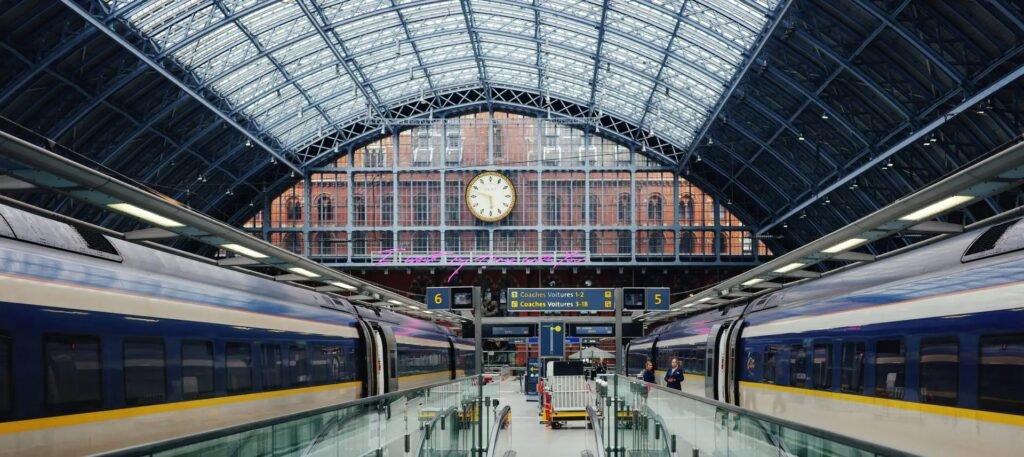
Travel by public transport
As much as I love and promote traveling by public transit, I get that not everyone is able to, or enjoys spending days on a train. But even if you only have a few days you can incorporate this pillar of slow travel.
If you choose to take a flight, you can always choose to travel by public transport to the city center from the airport, instead of renting a car or taking a taxi. Most airports in Europe are well connected by bus and/or train. Usually it’s much cheaper as well. That’s a double win already.
And once you get to your destination, the same thing applies. When staying in a city there are usually multiple options to get around. You can try out a few different ones and see what you like.
If you’d like to know more about why traveling by train is better read this post
Walk around
Walking is another option. That doesn’t mean you have to go on multi-day hikes. Even though I do love a hiking holiday. Most European city centers are compact enough that you can walk around them easily.
One of my favorite things to do is take a bus/tram somewhere and simply walk back. You see so many more things if you are just walking around. Don’t worry too much about getting lost. You can have your phone navigation on if you’d like.
What I like to do if I’m scared of losing my way is follow the transit line. But instead of staying on the same street I take parallel roads. This makes it easy to check if you are still going in the right direction. And you get to find places you may otherwise have overlooked. These streets are usually way nicer to walk along as well. I can’t tell you how many cute cafes and fascinating book shops I have found this way.
If you are visiting a bigger tourist focused city such as Rome they usually have specific guided tour buses that go past the big attractions. Not exactly the definition of slow travel but not a bad idea if you’re time is limited. Hop on the bus, do the lap, get a feeling for how far apart things are and then simply walk from one sight to the next. Again try to take side streets if you can. Remember, it’s about doing what you can in the constraints of real life. It doesn’t have to be perfect.
Go for the off season
Sounds simple but I know it’s not an option for everyone. I used to work as a teacher so for the longest time this wasn’t something I could do. It’s the same if you have children in school or your job doesn’t make it possible to take time of in certain times of the year.
But if you can, choosing the off season is a great way to travel slower. By choosing to travel in the off season you are spreading the pressure put on community by tourism. Also, not unimportant, you can probably get a better deal on things like accommodation. Especially if you are traveling somewhere that has seasonal tourism. For most big cities summer is the busiest. However there are also places where tourism is all about winter sports or Christmas markets for example.
My favorite seasons for slow travel
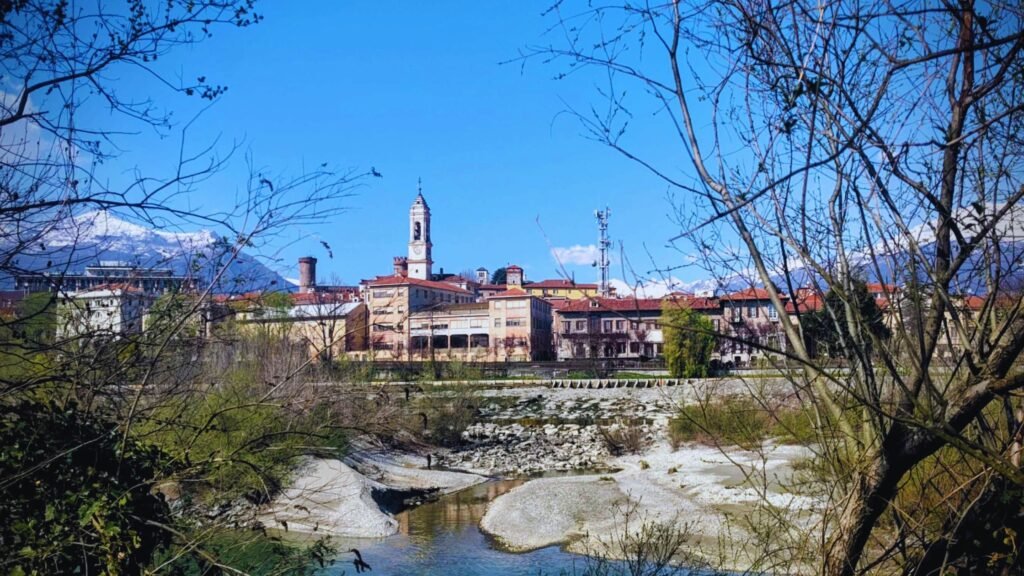
My personal favorite option is traveling to the Mediterranean coast in September or October (depending on how far south your destination is). The weather is usually still great, and the ocean is still pretty warm from the summer temperatures. Enjoy your beach holiday without the crowds.
For cities I usually like traveling in the months around July/August, avoiding the major floods of tourists, but still having a good chance of nice weather. But if you are going somewhere mainly for seeing specific things, you can travel at any time of the year.
One of the best trips I ever took was to Riga and that was in February. I had a few days of cold sunny weather and spend the rainy days in museums I wanted to visit.
Also, visiting winter sport locations in summer is great if you love active outdoors holidays! Accommodation is way more affordable and they usually have great hiking trails around.
Pick a different city
This one very much depends on the why do you want to travel question. Is there something specific you want to see or do? Is that something you can find elsewhere too?
Say you really want to go to Amsterdam, because you’ve seen the instagram posts of the beautiful tree lined canals, bikes everywhere, gorgeous old buildings and you really want to visit the Rijksmuseum.
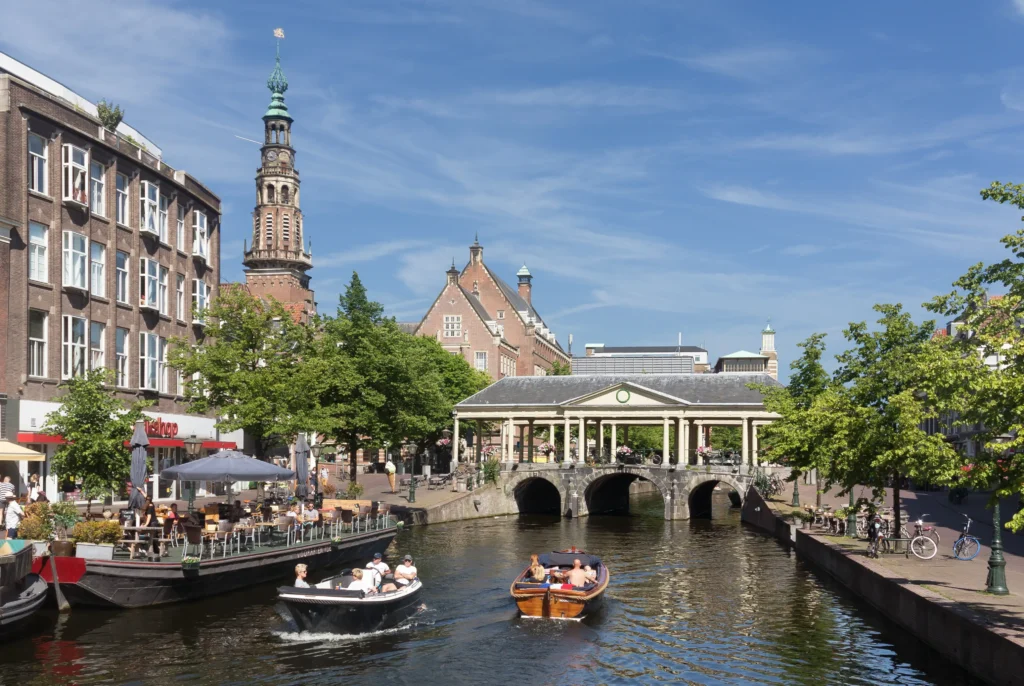

You don’t have to spend your days in Amsterdam to check off the things on that list. There are so many other cities with canals, bikes and beautiful old buildings. And for the Rijksmuseum, it depends why you want to visit it. If there’s some specific works you’d love to see in person, you can take a daytrip to Amsterdam. But if you are just interested in art in general there are so many other options. If you are interested in a specific artist, say Rembrandt for example, why not stay in a town he lived or worked in. These places usually have dedicated museums, where you can get so much more background information. Also if this example really spoke to you have a look at 10 alternatives to Amsterdam where you can find out exactly where you should stay instead of Amsterdam in this situation.
Support small local businesses
You don’t need to get your coffee from starbucks.
One of my favorite ways if I don’t have a lot of time somewhere is to buy a book from a local bookstore. They usually have some books on local history/culture and are happy to make recommendations that will keep you learning about a place even after you’ve gone home.
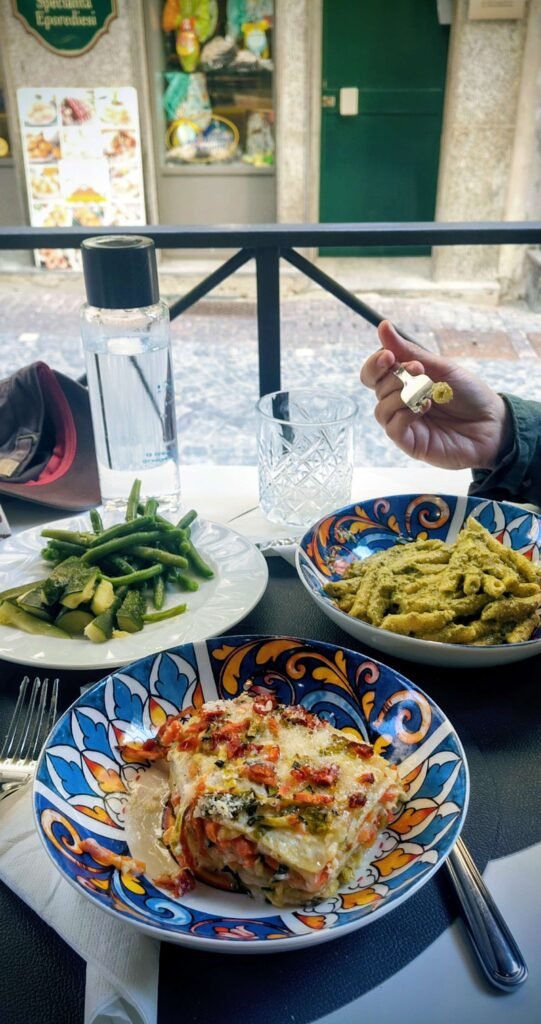
Also nothing says local culture like local food. Try to find places that serve fresh seasonal food. With diet restrictions this can be a bit more difficult, but it’s usually so worth it. Also, who doesn’t love food?
Do as the locals do
This one is sort of continuation of the previous points. But as an exercise it really really helped me finding more moments of slow travel. The idea of it is super simple. Look at what the locals are doing and do the same.
Now I’m not saying you turn into a private detective and follow people around all day. But have a look around when you arrive somewhere new. Where do parents go after they dropped of their kids at school? Where do students get their coffee before class? What do the people getting out of their offices do?
Observing these little things gave me so much more understanding of how different cultures in different cities worked. And when you know these things you can start to move with this unique flow that each place has.
Have a coffee at a bar in Italy, go for a bike ride in the Netherlands
I hope you learned how you can slow travel, when you don’t have time
Slow travel in it’s fullest isn’t always possible. But by making some changes you can include elements of it. Even small changes lead to more sustainable travel. For both our planet, and the people on it. The essence of incorporating slow travel is simple.
So do you think you will use some of these tips? What are the constraints you have when traveling? Let me know in the comments below!
A lot of the pictures in this post are from an upcoming slow travel city guide, and this time we’re going to Italy! If you want to know when it comes out, make sure to subscribe to my newsletter or follow me to be notified when it goes out.